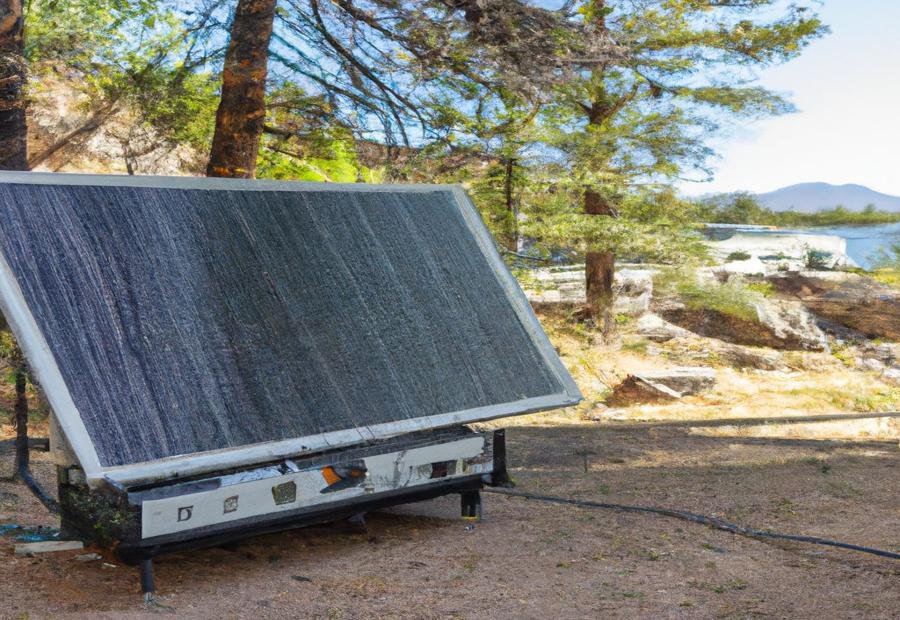
The open road beckons, promising adventure and self-reliance. For RVers, that dream often hinges on one crucial element: power. But harnessing the sun for true off-grid freedom isn't just about slapping a panel on the roof. It's about strategically outfitting your rig to get the absolute most out of every ray. Welcome to Maximizing Your RV Solar Generator: Accessories & Upgrades, your comprehensive guide to transforming your basic setup into an efficient, robust, and worry-free power plant.
At a Glance: Key Takeaways for RV Solar Generator Maximization
- Upgrade Smart, Not Just Big: Focus on component quality (e.g., MPPT controllers, pure sine inverters, lithium batteries) for efficiency and longevity.
- Monitor Everything: Real-time data on power generation and consumption is crucial for understanding and optimizing your system.
- Plan for Expansion: Size your controller and wiring for potential future panel additions.
- Safety First: Proper fusing, wire gauges, and secure connections prevent hazards and protect your investment.
- Maintenance Matters: Clean panels and regular checks ensure peak performance.
The Foundation: Understanding Your RV Solar Powerhouse
Before we dive into optimization, let's briefly revisit the core components that make up any functional RV solar setup. Think of it as your solar generator's nervous system and muscles.
- Solar Panels: These are your energy collectors, converting sunlight into electricity. They come in various forms—rigid, flexible, and portable—each with its own benefits for different RV styles and usage.
- Solar Controller: This vital "brain" regulates the power flowing from your panels to your batteries. Its primary job is to prevent overcharging and optimize charging efficiency, acting as a crucial intermediary.
- Battery Bank: Your power reservoir. This is where the electricity generated by your panels is stored for use when the sun isn't shining. Options range from reliable AGM to lighter, longer-lasting lithium batteries.
- Inverter: The magic box that transforms the DC (direct current) power from your batteries into the AC (alternating current) power your household appliances use. For sensitive electronics, a pure sine wave inverter is non-negotiable. Many advanced setups now integrate an inverter with a charger, creating an "inverter/charger" that handles seamless switching between solar, battery, and shore power.
- Remote Monitoring: Whether a simple display on your controller or a sophisticated app on your phone, monitoring tools let you keep tabs on energy generation, battery levels, and system health.
- Safety & Switching Gear: Components like fuse blocks protect your system from overloads, while transfer switches manage power sources, ensuring a smooth transition between solar, shore power, and generators.
Understanding these basics is the springboard for maximizing your system's potential, ensuring you have a reliable solar generator for your RV.
Beyond Basics: Essential Accessories & Upgrades for Optimization
You’ve got the fundamentals down. Now, let’s talk about how to supercharge that setup, making it smarter, more efficient, and truly ready for extended off-grid living.
Solar Panels: More Than Just Wattage
While watts tell you power potential, how you deploy and maintain your panels significantly impacts actual output.
- Portable Panels: Even with rooftop panels, portable units are game-changers. They allow you to park your RV in the shade (keeping it cool!) while positioning the portable panels directly in the sun. This is particularly useful in wooded campgrounds or during cloudy spells, augmenting your fixed setup. Look for models with integrated charge controllers for plug-and-play simplicity.
- Tilt Mounts: For fixed rooftop panels, tilt mounts can boost efficiency by up to 30% or more, especially in winter or at higher latitudes. Angling your panels to face the sun directly, rather than lying flat, captures significantly more energy throughout the day.
- Panel Cleaning Kits & Strategies: Dust, dirt, pollen, and even bird droppings can drastically reduce panel efficiency. A simple cleaning kit (soft brush, mild soap, squeegee, and de-ionized water) and a regular cleaning schedule are inexpensive ways to ensure your panels perform at their peak. Consider a long-handled brush for hard-to-reach areas.
- Considering Different Panel Types: Beyond standard rigid panels, flexible options can be beneficial for curved roofs or weight-sensitive applications, though they generally have lower efficiency and longevity. When evaluating different solar panel types, weigh factors like durability, cost, and specific mounting needs.
Smart Controllers: The Brain of Your System
The solar controller is arguably the most critical component for efficiency. Upgrading here offers significant returns.
- MPPT vs. PWM: The Efficiency Leap: If your RV has a basic setup, it might use a PWM (Pulse Width Modulation) controller. An upgrade to an MPPT (Maximum Power Point Tracking) controller is a must. MPPT controllers are significantly more efficient (10-30% better, especially in cooler weather or low light conditions) because they can "track" and utilize the maximum power available from your panels. This means more power delivered to your batteries, faster.
- Sizing for Expansion: When selecting an MPPT controller, always size it for your potential future needs, not just your current panel array. If you plan to add more panels down the line, ensure your controller can handle the increased amperage and voltage. Over-sizing your controller slightly from the start avoids a costly replacement later.
- Bluetooth Monitoring & Connectivity: Many modern MPPT controllers come with Bluetooth capabilities, allowing you to monitor real-time power generation, battery voltage, and historical data directly from your smartphone. This instant feedback is invaluable for understanding your system's performance and troubleshooting. For more detail on making the right choice, consult a guide on solar controller selection.
Battery Banks: Your Power Reservoir
Your batteries are the heart of your off-grid system. Upgrading them often provides the most noticeable improvement in usable power and longevity.
- Lithium (LiFePO4) Revolution: If you're still running on AGM or lead-acid batteries, upgrading to lithium iron phosphate (LiFePO4) batteries is a game-changer.
- Usable Capacity: Lithium batteries allow you to use nearly 100% of their rated capacity without damage, compared to 50% for lead-acid. This means a 100Ah lithium battery gives you roughly the same usable power as a 200Ah AGM.
- Lifespan: They boast significantly longer lifespans (thousands of cycles vs. hundreds), making them a better long-term investment.
- Weight: Lithium batteries are much lighter, improving your RV's payload capacity and fuel efficiency.
- Charging Speed: They accept a faster charge, meaning your panels can replenish them more quickly.
- Constant Voltage: They maintain a consistent voltage output, preventing "brownouts" that can affect appliances.
Learn more about lithium RV batteries to see if they're right for your rig. - Battery Monitors (Smart Shunts): Beyond the basic voltage meter, a dedicated battery monitor (often a "smart shunt" with Bluetooth) provides precise information: amp-hours consumed, amp-hours remaining, time to discharge, current draw, and charging current. This granular data is essential for managing your power budget and extending battery life.
- Battery Heating Pads/Boxes for Lithium: If you camp in cold climates, note that most LiFePO4 batteries cannot be charged below freezing (0°C/32°F) without damage. Consider batteries with integrated heating elements or external battery heating pads/blankets to protect your investment.
Inverters & Inverter/Chargers: Converting Power Seamlessly
The inverter turns battery power into appliance-ready AC. This is another area where quality and features make a huge difference.
- Pure Sine Wave Inverters: This is a non-negotiable upgrade for anyone powering sensitive electronics (laptops, medical devices, high-efficiency appliances). Unlike modified sine wave inverters, pure sine wave models produce clean, stable power identical to grid power, preventing damage and ensuring optimal performance.
- Inverter/Charger Combos: These sophisticated units combine an inverter with a powerful battery charger. The key benefit is seamless automatic transfer switching: when you plug into shore power or fire up a generator, the unit instantly switches from inverting (drawing from batteries) to charging (replenishing batteries) and providing AC power to your RV, often prioritizing the external AC source. Many also feature "power assist" to supplement weak shore power with battery power.
- Inverter Remote Controls: A remote panel for your inverter/charger allows you to monitor its status, battery levels, and toggle AC power on/off without having to access the unit itself, usually mounted in a convenient location near your RV's main control panel.
- Automatic Transfer Switches: For rigs with multiple AC power sources (shore, inverter, generator), an automatic transfer switch (ATS) ensures seamless switching between them. If you have an inverter/charger, it often includes a built-in ATS. Otherwise, a standalone unit simplifies power management. Understanding how to integrate these can greatly simplify selecting the right inverter for your RV.
The Unsung Heroes: Wiring, Fuses, and Connectors
These components might not be flashy, but they are absolutely critical for safety, efficiency, and reliability.
- Proper Wire Gauge: Undersized wiring creates resistance, leading to voltage drop and power loss, essentially wasting the energy your panels produce. Always use the correct wire gauge for your current and distance, as specified by electrical codes. This is particularly important for the heavy-current runs from batteries to the inverter.
- High-Quality Fuse Blocks & Circuit Breakers: Every major circuit needs protection. Fuse blocks (for DC circuits) and AC circuit breakers protect your expensive components and, more importantly, prevent electrical fires. Ensure they are properly rated for your system's amperage.
- Secure, Corrosion-Resistant Connections: Loose or corroded connections are a major source of power loss, heat, and potential failure. Use high-quality crimp connectors, heat shrink tubing, and dielectric grease to ensure robust, weather-resistant connections throughout your system.
Monitoring & Management: Knowing Your Power
You can't optimize what you can't measure. Comprehensive monitoring gives you the insights needed to maximize your solar yield.
- Dedicated Solar Monitoring Apps: Many high-end solar controllers and battery monitors come with robust smartphone apps that provide real-time data, historical trends, and even allow remote configuration. This puts all your system's vital stats at your fingertips.
- RV-Specific Power Management Systems: Some RV manufacturers and aftermarket companies offer integrated systems that monitor all aspects of your power, including solar, battery, shore, and generator, often on a single display or app. These can tie into other RV systems for a holistic view.
Elevating Your Experience: Advanced Upgrades & Strategies
Beyond individual components, strategic planning and advanced techniques can push your RV solar generator to its limits.
Expandability: Planning for Growth
The most cost-effective way to upgrade is to plan for it from the beginning.
- Future-Proof Your Wiring & Controller: If you think you might add more panels later, install wiring (from panels to controller, and controller to batteries) that can handle the increased amperage. Similarly, size your MPPT controller to accommodate future panel additions. This foresight saves significant time and money down the road. Most quality solar kits are designed with expandability in mind, but always verify the controller and wiring capacity.
Shade Mitigation: Outsmarting the Sun
Shade is the nemesis of solar power, but you can fight back.
- Strategic Parking: The simplest solution: park where your panels receive the most direct sunlight for the longest duration.
- Portable Panels (Again!): As mentioned, these are invaluable for moving your power source to the sunniest spot while keeping your RV cool in the shade.
- Parallel Wiring for Panels: If one panel in a series string is shaded, it can cripple the output of all panels. Wiring panels in parallel can help mitigate this, as shading one panel will only affect that panel's output, not the entire array.
- Generator Synergy: In prolonged low-light conditions, or for high-demand appliances like an air conditioner, solar may not be enough. Pairing solar with a generator offers true energy independence. The generator can top off your batteries when solar isn't sufficient, ensuring you always have power.
Integration with Other Power Sources
True off-grid flexibility means managing multiple power inputs seamlessly.
- Shore Power: Your primary grid connection, often used in campgrounds. Your inverter/charger should seamlessly prioritize this.
- Generator: For heavy loads or extended cloudy periods, a generator is a powerful backup. Ensure your system can accept its output to charge batteries efficiently.
- Transfer Switches: As discussed, these automate the switching process, protecting your system and ensuring uninterrupted power flow.
The "Solar Ready" Myth Debunked
Many new RVs are marketed as "solar ready." While convenient, it's crucial to understand what this actually means.
- What it Usually Is: "Solar ready" often means there are pre-installed wiring harnesses or roof ports for solar panels, and sometimes a basic charge controller.
- What it's NOT: It rarely means a complete, robust system capable of serious off-grid living. You'll likely still need to upgrade the controller (to MPPT), add a capable battery bank (lithium!), and install a powerful inverter. Always verify exactly what components are included and their specifications before assuming you're good to go.
DIY or Professional: Making the Installation Choice
So, you're ready to upgrade. Should you tackle it yourself or call in the pros?
- DIY Solar Installation: If you're comfortable with basic electrical work, understand safety precautions, and can follow detailed step-by-step guides, a DIY installation is definitely possible. Many online resources and communities offer extensive support. It's a great way to save money and intimately understand your system. Just remember to prioritize safety and double-check your work. For those considering the DIY route, here are some DIY solar installation tips.
- Professional Installation: If electrical work makes you nervous, or you have a complex system in mind, professional installation is a wise investment. A qualified RV technician or solar installer can ensure your system is safely and efficiently integrated, warrantied, and optimized for your specific needs. Use a local installer locator to find reputable professionals.
Maintenance for the Long Haul: Keeping the Juice Flowing
A properly maintained solar generator system will serve you reliably for years. Neglect it, and efficiency will plummet.
- Panel Cleaning: As mentioned, regularly clean your solar panels. Dust, dirt, leaves, and bird droppings are efficiency killers. A gentle wash with water and a soft brush is usually sufficient.
- Connection Checks: Periodically inspect all electrical connections for security and signs of corrosion. Loose connections can lead to resistance, power loss, and even fire hazards.
- Battery Monitoring: Keep an eye on your battery's charge and overall condition. For AGM batteries, ensure proper ventilation and check electrolyte levels if they are flooded lead-acid (though most RV batteries are sealed). Lithium batteries require less hands-on maintenance but benefit from monitoring their health via a smart shunt.
- System Diagnostics: Pay attention to any warning lights or error messages from your solar controller or inverter. Low power output or consistently uncharged batteries indicate a need to inspect panels, connections, or components.
Troubleshooting Common Solar Snags
Even the best systems can have hiccups. Here are quick answers to common issues:
- "My panels aren't producing power!"
- Check for Shade: This is the #1 culprit. Even a small shadow can significantly reduce output.
- Inspect Connections: Are all wires securely connected? Any corrosion?
- Controller Status: Is your solar controller showing an error or not indicating charge? Check its display or app.
- Fuse/Breaker: Has a fuse blown or a circuit breaker tripped?
- "My batteries aren't charging fully."
- Insufficient Sunlight: Prolonged cloudy weather or heavy shade.
- Panel Dirt/Debris: Clean your panels.
- Battery Health: Are your batteries old or failing? Get them tested.
- Controller Settings: Are the battery type settings correct on your controller?
- "My inverter keeps tripping off."
- Overload: Are you trying to power too many high-wattage appliances simultaneously? Check your inverter's capacity.
- Low Battery Voltage: The inverter will shut down to protect your batteries if their voltage drops too low. This usually points to insufficient battery capacity or charge.
Your Next Steps to Solar Freedom
Maximizing your RV solar generator isn't a one-time fix; it's an ongoing journey of learning, upgrading, and fine-tuning. By understanding your system, investing in quality components, and staying proactive with maintenance, you can dramatically extend your off-grid capabilities and truly embrace the freedom of the open road.
Start by assessing your current setup: What are its weakest links? Where do you experience power shortages? Then, prioritize upgrades that address those pain points, focusing on efficiency, capacity, and smart monitoring. With each improvement, you'll gain greater confidence and independence, making every adventure truly boundless.